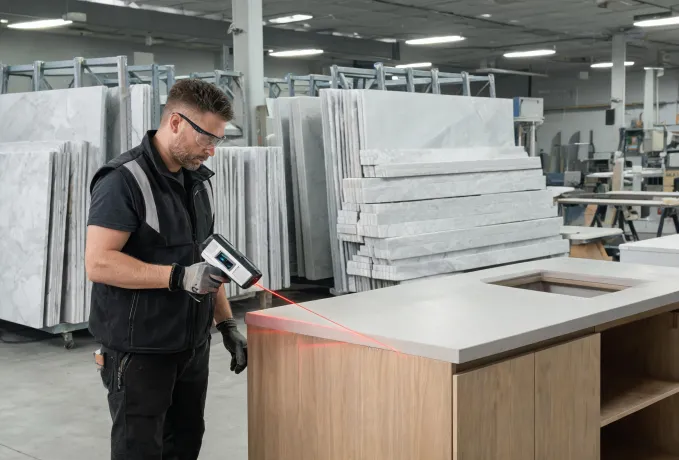
Since the 1980s, Caesarstone has focused on engineered quartz that gives architects, interior designers, and homeowners color consistency without abandoning material honesty. We build surfaces for kitchens, baths, and commercial interiors where abrasion resistance and food-contact credentials are part of the brief, not an afterthought.
In the 1980s, early engineered quartz answered a practical gap: natural stone offered character, yet multi-slab residential kitchens struggled with tone shifts and porous surfaces that demanded frequent sealing. Caesarstone pursued resin-bound quartz formulations that improved stain resistance while keeping mineral sparkle visible in polished finishes.
“Designers do not need louder claims — they need slabs that match the sample under the same lighting they specified.”
That mindset still guides how we expand collections toward 150+ engineered colors. Concrete looks such as Fresh Concrete and Rugged Concrete respond to architectural interiors that favor matte tactility, while Calacatta-inspired patterns give marble aesthetics with more predictable maintenance for family kitchens. Across 50+ countries, fabrication partners rely on documented 20 mm and 30 mm thickness options, care guidance, and limited residential warranty paperwork rather than oral folklore.
We also treat certifications as working tools. NSF/ANSI 51 listing supports food-prep counters, GREENGUARD Gold pathways help teams writing VOC emissions language, and ISO 9001:2015 / ISO 14001:2015 systems keep quality and environmental controls auditable for commercial procurement managers. Recycled content percentage discussions stay tied to program disclosures available on request — we do not publish a single plant-wide figure as a marketing headline.
Scope limits we state upfront: Outdoor Collection is for covered entertaining zones, not full freeze-thaw open decks; polished quartz is not a high slip resistance coefficient flooring substitute; and Caesarstone slabs are surface materials, not fire resistance rating assemblies for walls or structure.

Color names and photography aim to show real vein scale, not exaggerated filters that disappoint on install day.
We discuss water absorption rate, dimensional stability, and UV stability limits in plain language for fabricators and homeowners alike.
Friendly advisory support means answering sample questions quickly and admitting when outdoor exposure exceeds a product’s intended envelope.
Environmental management systems and recycled content conversations stay tied to measurable programs, not vague green slogans.
Showroom workshops help homeowners compare Caesarstone kitchen countertops under warm and cool LEDs before they approve fabrication. Designers leave with chip sets that fit presentation boards, reducing the cycle of ordering the wrong tone twice.
Trade partners also receive care guides that explain why high-pH cleaners can affect resin binders and how to maintain polish without abrasive powders that raise micro-scratch visibility over years of service life expectancy.
Templating teams need predictable flexural strength expectations and cutout guidance more than slogans. We publish practical notes so overhangs, cooktop openings, and dishwasher clearances stay within proven practices for engineered quartz.
When natural-versus-engineered debates arise on a project, we present both sides: marble’s unique mineral drama versus quartz’s consistency and lower sealing burden — then let the room’s use pattern decide.
Ask about collections, certifications, or a design consultation for your next residential or commercial surface package.